
Journey Management Plans: what goes in one and why
Sender, receiver, timeline, destination site and roads travelled, completed before the vehicle leaves. What Main Roads expects and how it protects both parties.
Most failed metropolitan deliveries are not late. They arrive on time, at the right address, and then cannot be unloaded. Almost all of them are preventable with two minutes of questions at the time of booking.
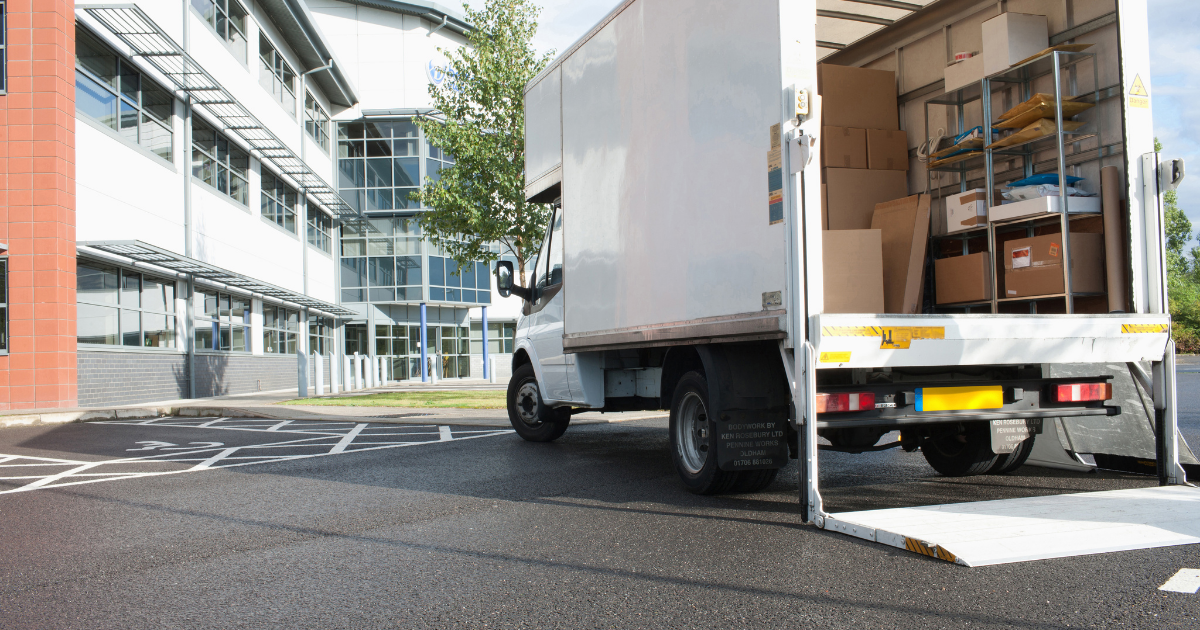
A tail-lift is a hydraulic platform on the back of the truck that lowers freight to ground level. It removes the need for a loading dock, which is why it is the workhorse of metropolitan delivery.
The numbers matter. Our tail-lift vehicles handle up to 1.5 tonnes on most of the fleet, and 2.5 tonnes on selected vehicles. Individually, items up to 1,000 kg and 2.4 metres wide can be handled on a tail-lift vehicle. Pallet jacks are supplied on request and are rated to 1,200 kg.
Where people come unstuck is the gap between "the truck has a tail-lift" and "the freight can reach where it needs to go". The tail-lift gets goods to ground level at the back of the truck. Everything after that depends on the surface and the route into the building.
If yes, most of what follows does not apply and the delivery is straightforward. If no, the tail-lift and pallet jack become the plan, and the rest of these questions decide whether that plan works.
This is the big one. A pallet jack needs firm, level ground. Smooth concrete or bitumen is fine. Gravel, grass, sand, a steep driveway or a kerb without a ramp are not — a loaded pallet jack will simply stop, and no amount of effort from the driver changes that.
Construction sites and rural properties are where this bites most often. A site that is perfectly accessible for a truck can be completely impassable for a pallet jack carrying 800 kg.
Total consignment weight is not the constraint — the heaviest individual item is. Two tonnes made up of twenty cartons is easy. A single 1,400 kg item exceeds the pallet jack rating even though it is well under the tail-lift capacity of a selected vehicle. Those are different jobs requiring different equipment, and knowing which one it is beforehand is the difference between a delivery and a return to depot.
2.4 metres is the practical width limit on a tail-lift vehicle. Beyond that, or where an item is unusually tall, the conversation moves to flatbed, heavy haulage or oversize configurations, which we also run — but they need to be booked as such.
Someone has to receive the goods and sign. Where nobody will be available, we need written authority for an unattended delivery before the truck leaves, not a phone call while it is waiting.
The driver's job is to get freight safely to the ground at the back of the truck. Everything past that point is a question about your site, and it is far cheaper to answer it in advance.
If a delivery cannot be completed because access is unavailable, nobody is there, or the site is unsafe, the driver contacts us and we contact you. The goods come back to depot or are re-delivered at a time that works.
Both of those cost money — the futile attempt and then the re-delivery — and neither produces anything useful for anybody. It is one of the few charges in freight that is entirely avoidable, and the avoidance is a two-minute conversation.
Before you book a metropolitan delivery to a site you have not used before:
Tell us those at booking and we will send the right vehicle with the right equipment. Our metropolitan coverage runs across the whole Perth area — Rockingham to Wanneroo and Yanchep, Mundaring to Armadale — and pallet jacks go on the truck on request rather than by default, so asking is what puts one there.
Sender, receiver, timeline, destination site and roads travelled, completed before the vehicle leaves. What Main Roads expects and how it protects both parties.
Perth to Narrogin is line haul. Getting freight on to Williams and Brookton the same day is a depot problem. What changes once you have one.
When a customer's timeline will not fit inside one driver's legal hours, there is only one lawful way to close the gap. Here is how the two options differ and what each one costs.